Blog

A Menopause Moment

“Give me my hormones or I’ll jump off a bridge,” a patient told me. “I will stalk you and hunt you down if you don’t write for my hormones,” another said. “I’d rather die from the side effects than live without hormones,” said another. “Life’s not worth living without them.”  

These were daily exchanges in the years after the 2002 Women’s Health Initiative (WHI) study terrified women and their doctors that menopausal hormone replacement therapy—or HRT—increased the risk of blood clots, heart attacks, strokes, and breast cancer.

“Life’s not worth living without them.” This haunted me—a lot. When menopausal ovaries stop making estrogen and progesterone, replacing these hormones made sense. In my gynecology residency training, hormone replacement was touted as the “fountain of youth.” We learned that HRT maintained women’s bone, brain, and heart health. Without it, heart attack risk rose to that of same aged men after menopause. HRT was like giving insulin to a diabetic—replacing hormones the body could no longer make.  

Then after the WHI media blitz, it was over. The case was closed on hormone replacement therapy and no further research was funded. Women stopped HRT cold turkey—and were MISERABLE. Some bargained for more hormones. Others went rogue, trying herbs and potions and supplements. For the next two decades, women suffered the effects of menopause: hot flashes and night sweats, insomnia, fatigue, loss of sex drive, painful intercourse, brain fog and memory loss, mood swings and worsening of depression, anxiety and ADHD symptoms, osteoporosis, joint and muscle pain and weakness, gastrointestinal symptoms, and massive changes in metabolism that led to weight gain, high cholesterol, insulin resistance, and diabetes.

“It’s the natural aging process,” said the party line. “Embrace it.”

I tried to buy it. What choice did I have? I knew WHI was flawed, but what could we do? WHI failed to account for risk factors like obesity, smoking, and family history (all of which increase the risk of blood clots, heart attacks, strokes, and breast cancer). The average age of women in the study was 63—meaning some were as old as 79 when starting hormones for the first time. They excluded women with hot flashes and night sweats in the study—yes, seriously.  And they only studied oral routes of synthetic progesterone and conjugated equine estrogen (estrogen derived from horse mare urine). But what about non-oral routes and naturally occurring, bioidentical forms—hormones that are chemically identical to the ones made in the body?

I owed it to my patients to find alternatives to the cold-turkey-deal-with-it approach. I studied integrative medicine and became certified in numerous modalities so that when desperate patients needed to think outside the box or showed up with bottles of supplements and herbs, I could help them.

Twenty-three years later, menopause is having its moment. An Australian study found one in five women in the prime years of their careers quit their jobs due to symptoms of perimenopause and menopause. Oprah Winfrey and other celebrities started discussing the taboo topic and suddenly menopause is everywhere.

The pendulum has swung back to prescribing hormones, leaving patients and most doctors confused. It’s called Menopausal Hormone Therapy (MHT) now—not HRT. We know more about estrogen metabolism today, and that not all estrogens are equal. There are estrogen forms that are breast and uterine cancer-promoting (estrone and others) and forms that are cancer-preventing (estradiol, estriol and others). We know 50-70% of conjugated equine estrogen (CEE) is made from estrone. That explains a lot, I think. I prescribe bio-identical hormones today.

We know, too, that transdermal (patch or cream) estrogen bypasses the liver and does not increase production of blood clotting factors that cause blood clots, strokes, and heart attacks the way estrogen in pill form does. I prescribe transdermal estrogen today.  

And we know the risk of breast cancer from HRT was blown out of proportion from the WHI study. That study (with oral CEE and synthetic progesterone—not transdermal, bio-identical hormones) found an increased breast cancer incidence of five out of a thousand women per year: an absolute risk of 0.08%; less than 0.1 percent.

There was no increase in breast cancer deaths in the women in WHI, but no one explained that either. Nor was it emphasized that one in eight women in the United States will get breast cancer, regardless. One in eight.

Nor was it stressed that even if we did still prescribe oral CEE (which we (or I) do not), the breast cancer risk would still be lower than that which is attributed to obesity and to alcohol use. The sobering facts are that 2-3 servings of alcohol per day increase breast cancer risk by 20%, and just one serving per day increases risk by 7-10% compared to non-drinkers. Obesity increases breast cancer risk by 20-40%. Why? Because alcohol and obesity cause good estrogens (estradiol and estriol) to be converted into bad estrogens, like estrone. We know this today.

The current standard of care supports use of transdermal, bioidentical estrogen even in women with a first degree relative (like a mother or sister) with breast cancer or with a personal history of a benign breast condition. You can read that again if you must. We know this today.

Today we also know there is a window of opportunity for starting hormones: within ten years of the onset of menopause and before the age of sixty. It’s not a hundred percent hard and fast, but it’s close. We now know that damage occurs to blood vessels in the period between the onset of menopause and the initiation of hormone therapy. So, the shorter the hiatus, the better. (This highlights the WHI flaw of starting older women on HRT.) There are exceptions to the age rule that must be discussed with your menopause-qualified provider.

You might be celebrating all the big, hot buzz about menopausal hormone therapy. Or maybe you’re not a candidate for hormones and are thinking, “but what about me?” There are non-hormonal pharmaceutical options that women (and many doctors) are largely unaware of, and there is a slew of blood work and health optimization that can turn your life around. Integrative medicine empowers us to realize we are in control of that metabolic pathway that converts bad estrogens to healthy ones and that dietary, herbal, mind-body, and other lifestyle approaches can specifically target that conversion. I teach this to patients today. When I’m counseling patients and lecturing to groups, today, I reflect upon the desperation my patients experienced two decades ago. I am thankful we have more to offer now, and I am hopeful that today’s buzz will lead to tomorrow’s research. Because we still have a very long way to go.

By Suzanne Bartlett Hackenmiller, MD, FACOG, ABoIM, dipABLM, MCP

Twenty-Five Women’s Health Tips for 2025; Or Twenty-Five Years of ‘Ask Dr. Suzy’

“Is it time for ‘Ask Dr. Suzy’?”

Years ago, as a medical student spending time with my non-medical friends, every gathering would end in ‘Ask Dr. Suzy’ and all the questions my girlfriends were dying to ask would pour out. I laughed at their expectations that I knew anything after a few semesters of medical school, but this game became an ongoing tradition.

Twenty-five years into practice as an integrative gynecologist, I have compiled my top twenty-five tips for 2025, by the decade, for women’s health. Don’t despair if your decades are off; it’s never too early and never too late to start!

The Twenties:

1) Create a Daily Routine. Nature is based on routines—the twenty-four-hour rotation of the Earth, the monthly lunar cycle, the rhythm of the tides—and the ancient practice of Ayurveda teaches that when we’re in sync with these rhythms we achieve optimal health. Managing our daily behavior and attempting to reach goals is energy-intensive, but creating habits saves mental energy and makes us more likely to follow through. Stacking habits—adding new habits to existing habits, like brushing your teeth—is a trick that works. Start and end your day with variations on the following themes:

Morning:

  • Make your bed (and immediately have one thing done for the day!)
    • Meditate or journal
    • Exercise—The World Health Organization (WHO) recommends 150 minutes of moderate intensity or 75 minutes of vigorous intensity per week at every age. Vigorous means you are barely able to speak during the activity; moderate means you can speak a sentence or two. Start early with strength and resistance training too, at least two days per week.
    • Eat breakfast

Evening:

  • Meditate
    • Eat dinner
    • Take an evening walk—this is my best tip for lowering blood glucose and improving sleep!
    • Relaxation/reflection/journaling
    • Bedtime

2) Limit Toxins. Become a label reader and work to reduce your risk! We are inundated with exposure to endocrine disrupting chemicals like parabens in our personal care products, phthalates in our household cleaners and detergents, and pesticides and herbicides, all of which are linked with fertility problems, neurological diseases, and many types of cancer, to name a few. It’s also never too late to reduce your exposure to plastic—and certainly avoid eating and drinking out of it—as 93% of Americans have the plastic bisphenol-A (BPA) in their blood stream and a recent study found four out of six placentas had microplastics in them. Check your products’ safety with the Environmental Working Group at www.EWG.org.

3) See a Therapist. A recent study found since the COVID-19 pandemic, the incidence of depression, anxiety, psychological distress, loneliness, and poor mental wellbeing have risen. Take it from so many celebrities who have spoken out about their mental health journeys—it’s ok not to be ok. Help is available and if you or someone you know is in crisis or considering suicide, there is always someone to talk to. Call the suicide and crisis hotline at 988.

4) Learn (and use) 4-7-8 Breathing. I know of no other trick that breaks the cycle of stress and anxiety as fast as 4-7-8 Breathing, taught and popularized by my teacher and mentor, Dr. Andrew Weil. I have watched this technique resolve issues from heart arrhythmia to tremors and I use it every day whether I’m speaking before an audience or sitting in traffic. It’s simple: Breathe in for the count of four, hold your breath for the count of seven, exhale for the count of eight and repeat four times. Try it now!

5) Start a Gratitude Practice. Taking time to count our blessings has been shown to improve mental health, sleep, our relationships and self-esteem. By reducing stress, it can even lower blood pressure, reduce inflammation, and improve cardiovascular health. As one of your daily habits, start a gratitude journal, or name three things from your day you’re grateful for at bedtime, or play the alphabet game, listing gratitude from A to Z.

The Thirties:

1) Maintain Bone Density. First in the category of “no one ever told me this”: we build bone up to age thirty-five and it’s all downhill from there. Be sure you’re getting adequate calcium, magnesium and phosphorus in your diet. Get Vitamin D through exposure to early morning sun or by supplementing (have your level checked if you’re not sure how much to take), practice weight bearing exercise, avoid smoking and excess alcohol, and limit use of corticosteroids, if possible.

2) Reduce or Eliminate Alcohol. The message that alcohol is good for your health has been disproven. A study found an amount of alcohol less than one drink per day was associated with a five percent increased breast cancer risk, and in another study there was no safe level of alcohol consumption for dementia risk. Additionally, oxidation (or burning) of alcohol delays fat oxidation which can hamper weight loss efforts.

3) Floss Your Teeth. Stack flossing onto the habit of brushing your teeth, as research shows those who don’t floss have higher levels of the inflammatory marker C-reactive protein in their blood and have higher prevalence of and mortality from cardiovascular events such as heart attacks.

4) Eat the Rainbow. Ayurveda also teaches us to incorporate every color of the rainbow into every meal, or at least into every day. Each color in a plant-forward diet, from vitamins and minerals to phytonutrients and antioxidants, offers specific health benefits. To name a few, we get beta-carotene (good for the eyes) from the orange pigments in such foods as carrots, yams, and oranges; lutein (good for eye, brain, and heart health) from the green pigments in kiwis and broccoli; and lycopene (important for cancer protection and the immune system) in red foods such as tomatoes, watermelon and beets.

5) Spend Time in Nature. If you know me at all, you know I am a firm believer that time in nature heals much of what ails us. Research finds it boosts the immune system, improves blood pressure, reduces production of stress hormones, and improves memory and mood. Schedule time outdoors as part of your regular routine—I recommend 150 minutes per week, just like the recommendation for physical activity.

The Forties:

1) Prepare for Perimenopause. Perimenopause starts before menopause and continues through one year after the final menstrual period. It can start as early as age thirty-five and can last for seven to ten years. It’s a time of massive hormonal fluctuation and symptoms can include mood changes, hot flashes and night sweats, weight gain, fatigue, menstrual irregularities, skin/hair/nail changes, sensory changes, brain fog, insomnia, GI changes, muscle/joint aches, libido changes, and genitourinary issues. Treatment options exist, so women should seek the guidance of a Menopause Certified Practitioner. We know that the health and fitness women possess in their forties and fifties predicts their level of wellness into the eighties and beyond.

2) Manage Weight Now. Second in the category of “no one ever told me this,” managing weight becomes harder in perimenopause. A study found the percentage of women’s visceral fat changes from an average of 8% of their body weight before menopause to an average of 20% after menopause without changes in diet or exercise. For this reason, I recommend working to manage weight before the hormonal changes kick in. Options now exist for weight management, so talk to your doctor.

3) Learn to Meditate. Two of my mentors in their seventies and eighties regretted not learning meditation earlier in life—so I listened to them, started my own meditation practice, and became certified to teach meditation. When under chronic stress, our sympathetic nervous system—our fight/flight/freeze state—is continuously engaged. This accelerates brain aging and contributes to multiple chronic conditions in lab animals and humans. Meditation induces a state of deep rest which allows the body and mind to heal itself. During this process of parasympathetic—rest/digest/restore—regulation, blood vessels expand, muscles relax, digestion occurs, blood pressure drops, and the brain releases neurotransmitters linked to happiness and calm. Meditation can contribute to the healing of both mental and physical illness, and it is never too late to start.

4) Optimize your Nutrition. The forties are a crucial time to take stock of your diet. A plant-forward, anti-inflammatory diet that is low in added sugars (aim for less than 25 grams of added sugar per day), eliminates processed food, is high in fiber and prebiotics (aim for at least 25 grams of fiber per day), and offers 1.3-1.6 grams of protein per kilogram of ideal body weight per day. Not only will this optimize your cardiovascular, brain, and bone health, these recommendations aid in the conversion of dangerous estrogen metabolites (those that promote cancer development) to healthy, cancer-fighting estrogen metabolites in the body.

5) Consider Life Goals. Health goals such as “I want to lose fifty pounds” or “I want to lower my blood pressure” are meaningless unless they’re attached to life goals: “I want to be fit enough to hike to a landmark on my upcoming vacation,” “I want to be able to carry my grandchildren someday,” or “I want to live to see my children/grandchildren graduate from high school/college.” Spend time considering your life goals and how your health goals might help you get there.

The Fifties:

1) Feed your Microbiome. With lower levels of estrogen during menopause, our microbiome—the array of healthy bacteria and yeast that live in our gut—becomes less diverse, shifting towards a more male-like composition associated with increased heart disease risk. The decline in hormones may also contribute to “leaky gut” which allows external toxins to enter the blood stream. Eating probiotic foods, such as fermented (low or no-added sugar) yogurt, kefir, sauerkraut, kombucha, miso and tempeh, as well as prebiotic foods like chicory root, onions and root vegetables is the optimal way to support your microbiome.

2) Learn your Menopause Treatment Options. Over the twenty-nine years I have treated women in menopause, the pendulum of menopausal hormone therapy has swung from favorable to “deadly” to (oftentimes) favorable again. This shift was a major contributor to my decision to study integrative, herbal, lifestyle, and Ayurvedic medicine, as I was seeking to find options for my patients and, I knew, eventually for myself. There are so many ways to deal with the myriad of menopausal symptoms—ranging from hormonal to herbal to nutritional—and you owe it to yourself to see a Menopause Society Certified, ideally integrative gynecologist to learn what’s right for you.

3) Strengthen your Grip. Grip strength in midlife (and beyond) correlates with overall mortality risk. In fact, research shows lower baseline grip strength is correlated with increased risk of mortality over ten years. Improve yours by using the Farmer’s Carry: walk for one minute with a weight in each hand. Increase the difficulty level by bending your elbows at 90 degrees. You can also “dead hang” from a pull-up bar with arms straight. At age forty, women should be able to dead hang for ninety seconds, and this will decrease slightly each decade. Finally, you can purchase an inexpensive dynamometer at a sporting goods store which will measure your grip strength and may be incorporated into your strength training routine.

4) Improve your Balance, Agility, and Stability. The American College of Lifestyle Medicine recommends older adults incorporate two hours per week of balance and agility exercise into their routine to reduce the risk of falls. Join a class designed for balance, agility and stability; practice yoga; or hike on uneven terrain to meet this guideline. It’s also beneficial to practice step-down exercises: spend two to three seconds slowly stepping down from one step to the next on a set of stairs; repeat five times on each leg. This trains the body to catch itself when falling forward.

5) Ask about a DEXA Scan. Estrogen loss at menopause hastens bone loss but the US Preventive Services Task Force does not recommend a bone density test—or DEXA scan—until age sixty-five. This is often too late, depending on risk factors, so discuss with your doctor at menopause. It is disheartening to learn that in over forty years, the mortality of hip fractures has remained unchanged: up to a third of people over sixty-five who fracture their hip are dead within the year.

The Sixties and Beyond:

1) Pay Attention “Down There.” Current guidelines are for women to discontinue pap smears at age sixty-five, UNLESS there is a new sexual partner after that time or other risk factors apply. This means women often stop having regular pelvic exams and often ignore other gynecologic symptoms. Any vulvar or vaginal itching or burning, vaginal bulge or prolapse, postmenopausal bleeding, or leakage of urine should be evaluated by your gynecologist. Treatment options exist!

2) Maintain your Tribe. The Surgeon General says “Loneliness is the New Smoking” with research finding mortality risk from loneliness is equivalent to the mortality risk of smoking fifteen cigarettes per day and is higher than the risks from alcoholism, obesity, and lack of physical activity. It’s good for your health and longevity, therefore, to find and maintain a tribe of people who matter to you.

3) Stay Active. Remember that the WHO’s physical activity recommendations apply at all ages—150 minutes of moderate or 75 minutes of vigorous activity per week, plus strength and resistance training at least twice per week (see tip #1). Find safe and enjoyable activities and keep them going!

4) Forgive (Or Don’t). There is research supporting forgiveness and there is research against it. While forgiving others can benefit mental and physical health for some, there is also evidence suggesting that feeling pressured to forgive their offenders can lead trauma survivors to avoid seeking support. Work with a qualified mental health professional if this is an issue in your life and approach this subject with mindfulness and self-compassion.

5) Write your Story. You matter, your life story matters, and you deserve to have it preserved. Write it down. I have been enjoying a daily writing prompt I created for this and look forward to sharing it with you soon.

And thus completes the latest installation of ‘Ask Dr. Suzy.’ Let’s thrive in 2025!

Finding Peace is in Reach; An Autism Journey

By Suzanne Bartlett Hackenmiller, MD

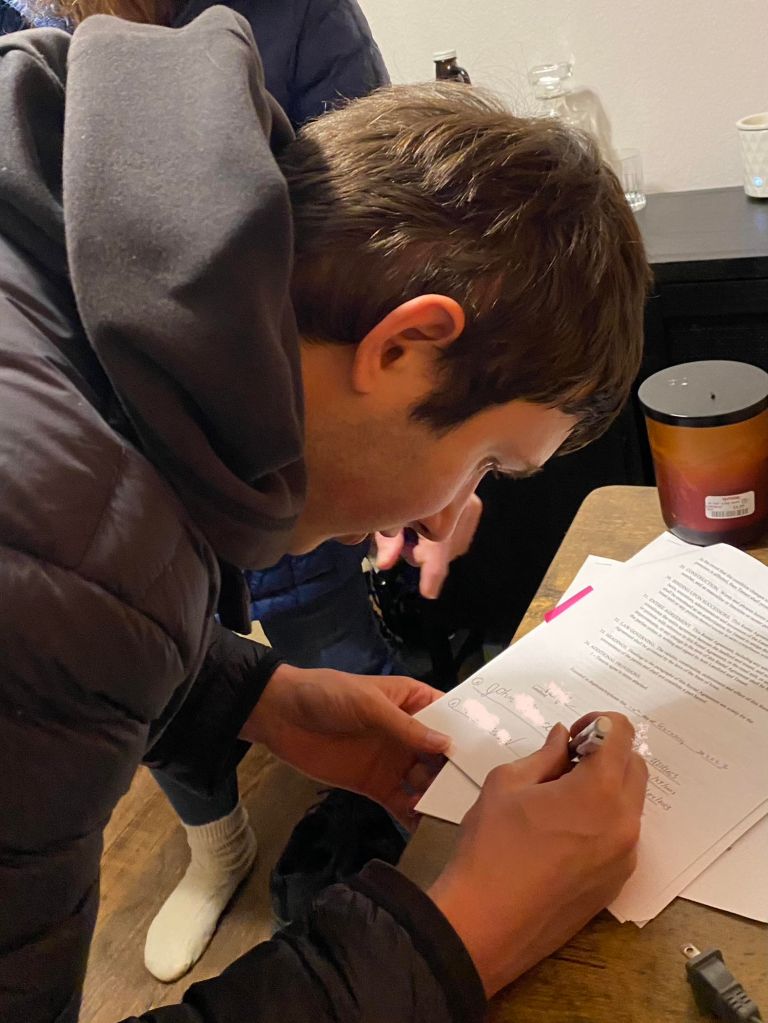
My twenty-two-year-old son signed a lease. As his guardian, technically I signed a lease. But John signed it too, in a ceremonial rite of passage.

It’s the time of year when young adults in college towns clamor for rental properties in an annual game of musical chairs. Sealing the deal is a challenge for anyone but, for John, two decades of hurdles preceded this day.

John was diagnosed with autism at two years and nine months of age. A condition affecting language development, intellectual ability, and interactions with others, autism now affects an estimated one in thirty-six children in the United States. Twenty years ago, the prevalence was one in one hundred fifty. Whereas autism centers now pepper the country, services were scant in 2003 which set the first row of hurdles for John.

Baby John’s big brown eyes locked with mine as he nestled into my lap, his tiny hand wrapped around my finger as we rocked in our glider. I said to myself, “thank goodness he doesn’t have autism.” Having worked with students and patients on the autism spectrum, I thought our bond meant one of my maternal fears had been averted. Yet something about John seemed off: he was calmed by music and geometrical patterns, he had precocious abilities (singing the Star-Spangled Banner, identifying octagons in everyday objects, counting to ten in three languages, and pronouncing six-syllable words all before age two), but conversation wasn’t developing. While other toddlers’ language improved and tantrums subsided, John’s tantrums worsened. If he wasn’t screaming, he was spinning a toy, a wheel, or himself.

As a physician, I knew about milestones. John landed on the far-right-hand side of the developmental bell curve, so our pediatrician dismissed my concerns. But intuitively, I dug old pediatrics textbooks from my basement to search “language delay.” I was shocked to find—in each resourcethe only diagnosis was autism. Early intervention professionals confirmed it.

When our options for services were to relocate or hire in-home professionals for $120,000 per year, our local autism team rose to the occasion and created a program for John that would later become the district’s special education preschool standard.

I have vivid memories of picking John up from preschool; of that solemn-faced little boy strapped in his booster in the back of my minivan.

“What did you do at school today, John?” I would ask.

“Friends,” he would say.

And that was it.

This was our dialogue day after day, and day after day, that was it.

“Friends,” he would say, just, “friends.”

Every day I would pray he could one day say more.

I would pray he would truly have friends.

Meanwhile, I bought toys—too many toys—in my quest to stimulate John. If a toy or video was educational and kept his attention, I bought it. As John got older, I struggled to find age-appropriate playthings. One of my victories was a VHS tape called Animusic. The video showed animated robotic instruments in whimsical rock bands and symphonies. It was inspiring, innovative brilliance and John loved it.

The 2000s were the decade of autism awareness and fundraising to cure autism. Documentaries depicting dismal lives with children on the autism spectrum arouse. Our family volunteered, walked, ran, and bicycled in charity events. We attended a Hollywood gala and shared the red (well, blue for autism) carpet with celebrities Jerry Seinfeld, Ed Asner and Paul Simon. At another event, former President Bill Clinton noticed my autism hat and stopped. He believed stem cell therapy would cure autism during my son’s lifetime. Maybe it will. Maybe it won’t.

But over time, the fervor to cure autism gave way to a movement of acceptance; a realization that human existence, itself, is a spectrum. It was acknowledged that people with autism could (and deserved to) live and thrive like everyone else.

An early advocate was Sally Pederson, former Lieutenant Governor of Iowa and the mother of a son with autism. Seared into my memory is her 2005 presentation at the Autism Society of Iowa where she shared her son’s experiences at an Illinois college. She pressed for the creation of a similar program at the University of Iowa, later named REACH, for Realizing Educational and Career Hopes. This gave me hope.

But my hope faded over time. Secondary school meant fewer services, special education budget cuts, and Individual Education Plans (IEPs) that seemed not-so-individual. I became “that parent” who often lost but always fought for more. The district’s and my hopes seemed on two different tracks, and the hurdles just kept growing higher.

And then it was John’s senior year, and post-graduation talks started. I had this niggling voice in my head: remember UI REACH? It dangled like a carrot in the back of my mind; a what-if. But as I considered John’s progress, it seemed unattainable. John’s language remained stilted—how could he manage an interview? John needed help crossing the street—how could he navigate campus?

But that niggling, that little voice. It was stifled and weary but deep in my head whispered, “GO!” So, in the eleventh hour, John and I visited the REACH program in Iowa City, Iowa. Faculty members expressed optimism and noted qualities I took for granted: John did our laundry, loved to vacuum, drove a riding lawnmower, and was polite, kind, and courteous. They encouraged him to apply. They rekindled hope.

So, we applied.

And we waited.

And John interviewed.

And John was accepted.

***

UI REACH is a two-year program with optional additional years. Students live in residence halls alongside traditional undergrads for two years and spend additional years in an on-campus apartment. They take REACH-specific courses and are encouraged to audit or complete community college or university courses, if appropriate. Students enjoy social activities each week and learn independent living and job skills. Internships are tailored to their interests and students graduate with a certificate of completion. UI REACH is a model of excellence; a prototype for others to emulate.

John moved into the dorms in August of 2019. Despite the program’s many safety features, I suffered weeks of hair-graying stress. I’ll admit I tracked my kid electronically, at first, fearing he would be hit by a car, lost, abducted, or worse. In week two, John called me in a panic, lost on campus. I was about to give a large work presentation, but technology allowed me to locate and reroute him, and get both of us breathing again.

A month later, my husband Joe and I visited John and took him out for lunch. We planned to drop him off on our way home.

“That’s ok,” John said, “I can walk.”

Joe and I were in disbelief as John blended in with the crowd, strolled down the sidewalk, crossed at the light, and walked the six blocks to his dorm. My anxiety lifted like a hot air balloon.

“He’s got this,” Joe said with a grin.

John has now completed three years of REACH (plus a COVID gap year). He expressed his desire to live in Iowa City after graduation, but I couldn’t see how it could work. But the Universe conspired with John’s circle of support, and a friend had a friend who had apartments for rent. A roommate was identified, support services were found, and things seemed to fall into place.

Today, John is finishing a paid internship in production with an offer to return after graduation. He navigates the campus and city buses to get to his job—a fact that still blows my mind. He loves the constancy and repetition of the production line, I believe, and watching robots at work makes his day.

“It’s my dream job, Mom,” he says.

John works out at the gym most days and buys himself a treat on payday. He enjoys hanging out with friends who, it seems, are everywhere. Joe and I are amazed at how often we bump into friends—REACH and traditional college students, alike—in restaurants, around town, and at airports in two different cities who tell us they know and love John.

***

In 2010 I was asked to lead a discussion on the Dalai Lama’s book, The Art of Happiness, correlating with a visit to our community from His Holiness, himself. In preparation, I read numerous books on the spiritual leader. The challenges of work burnout, my late husband Dave’s terminal cancer, and raising two young kids often made me contemplate the purpose and meaning of life.

The Dalai Lama is quoted as saying, “The very purpose of life is to be happy. . . The key is to develop inner peace.”

“Is that really it?” I have wondered.

Is the purpose of life to find happiness and joy?

To develop inner peace?

That’s it?

And how do you know when you’ve found it?

Well remember that old VHS tape, Animusic? You can now stream it; my son happens to know. Home on his final spring break, he asks me to watch it with him. Twenty-two years of memories wash over me as I sit on the sofa with John, pure joy igniting his face. Blinking back tears, I am flooded with gratitude for the village of people who have always been there for him. I picture that little boy in the back seat whom I’d prayed for. I reflect on his progress, his independence, his apartment, his friends, his job, and his ability, now, to sit on the couch and chat. I see peace in my son like never before—inner peace.

I realize I have it too.

“Look, Mom,” John says. “There are robots like this at my job.”

#

Our Webinar, “Nature & Human Health: Evidence & Action” and Continuing Medical Education Program is LIVE!

It has been a year in the making, but my colleagues and I are excited to share that our webinar, titled “Nature and Human Health: Evidence & Action,” is finally complete and available at no cost for viewing.  This project was made possible by ParkRx America and through a grant from the Forest Service.  One hour of AMA PRA Continuing Medical Education credit is available through the American Public Health Association for only $35.00 per provider. 

This webinar takes a look at chronic mental and physical health conditions that medical providers and our patients are experiencing at increasing rates each year. My colleagues and I make the case that spending time in nature has evidence-based health benefits to combat these conditions. We share specific studies about nature’s effects and even talk about dosing; how much time do we need to spend outdoors to reap these health benefits? And in this era of COVID, how do we safely even spend time outdoors? Can benefits occur in small nature doses close to–or even inside–our homes? We offer specific tips to providers for incorporating nature into their work days and even explain how to write a nature prescription for patients and clients.

My colleagues will introduce themselves in the webinar but, briefly, our team includes myself, Dr. Robert Zarr, pediatrician and founder of ParkRx America; Dr. Kathleen Wolf, Research Social Scientist at the University of Washington, College of the Environment, School of Environmental and Forest Sciences; and Dr. Courtney Schultz, Research Fellow at ParkRx America and Executive Director, Health & Technology Partners, LLC.

To view the one hour webinar, please click this link: https://parkrxamerica.org/continuing-education/

We hope you will check it out and will share far and wide!

Ten Simple Ways to Keep Ourselves and Our Healthcare Workers Healthy During the Coronavirus Pandemic

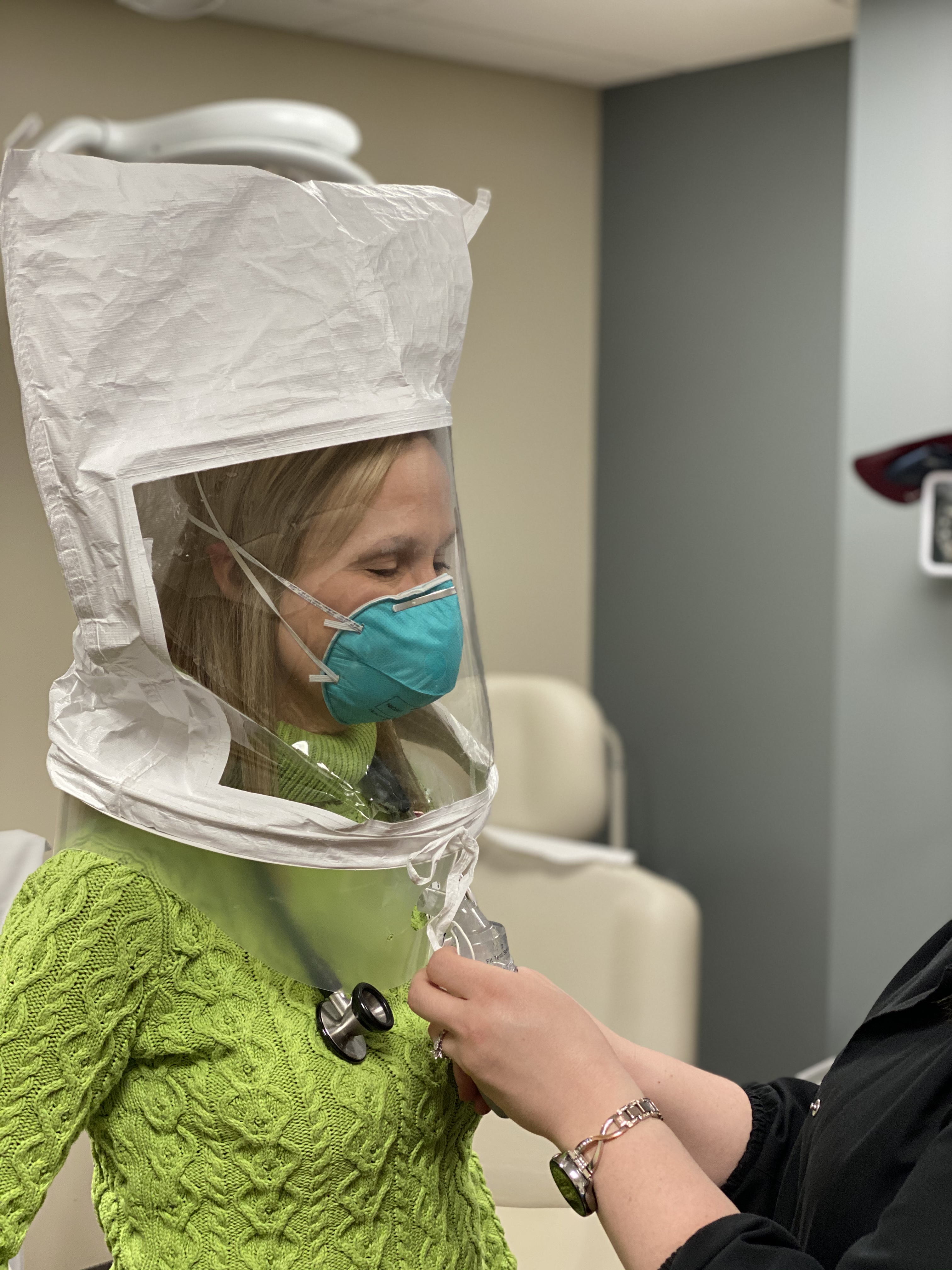
COVID hood 2

Ten Simple Ways to Keep Ourselves and Our Healthcare Workers Healthy During the Coronavirus Pandemic

March 19, 2020

“Please put your own oxygen mask on before assisting others.”  Have you heard that before?  As healthcare workers, parents, teachers (well, everyone, right now) this overused analogy could not be more important.

Between physical distancing, pandemic fear and anxiety, stress eating and less activity, many of us may find ourselves in a vicious cycle that would best be addressed sooner than later.  I write this from the perspective of a healthcare professional, but also as a human being who, like everybody else out there, is just trying to stay afloat.  From the conversations I’ve had with physician colleagues all across the country over the last few days, stress levels have been higher than I’ve ever seen.  And if we as doctors, nurses, hospital administrators, technicians, paramedics (and, really, anyone who works in a healthcare capacity) don’t take care of ourselves, this coronavirus crisis will only be intensified.

So, I created a list of ten simple things we can ALL do (healthcare workers or otherwise), starting RIGHT NOW.

  1. Turn off the news, put down your phone, get off social media at least an hour before bedtime. The news will still be there in the morning and you’ll catch up quickly.  Set an alarm for an hour before bed and stick to it as the official time to power off your devices.  The constant barrage of news and social media not only contributes to anxiety and stress, but screen time has been found to suppress melatonin production and to disrupt sleep (Hale, 2015).
  2. Get EIGHT hours of sleep per night. Again, schedule it.  Prioritize it.  Evidence abounds that eight hours of sleep per night is the magic number for rejuvenation of brain and body tissues, emotional processing, and maintaining a healthy immune system.  The book, “Why We Sleep,” by Dr. Matthew Walker is a fantastic resource complete with hundreds of studies supporting this fact.
  3. Eat your VEGGIES and avoid processed food. To maintain a healthy immune system, to keep serotonin levels high (serotonin is one of many neurotransmitters that manage our mental health, and the micro-nutrients in fruits and vegetables are used to make serotonin), and to keep your waistline in check, fill up on vegetables.   A CDC report in 2010 showed fewer than 26.3% of Americans ate vegetables more than three times per day, so this is not the time to short-change yourself.  Studies also show that a diet high in processed, packaged and fast food contributes to inflammation in the body that affects everything from heart disease risk, to a compromised immune system, to poor mental health. Before reaching for those chips or candy, try one of the suggestions in numbers 6-10, below.
  4. Take a high-quality multivitamin. Even with the most optimal diet, including the recommended 5-7 servings of fruits and vegetables per day, most people still could benefit from a high-quality multivitamin.  Certain medical conditions predispose people to different types of deficiencies, so sometimes blood work can be helpful in knowing what you need.
  5. Refrain from self-medicating with alcohol and other substances. Drugs and alcohol inhibit deep and REM sleep, exacerbate mental health conditions, contribute (in some cases) to weight gain, interfere with social relationships and on and on and on.  If you’re feeling the urge to self-medicate, consider trying a breathing technique, a guided meditation, a walk outdoors, or some of the other suggestions below before giving in.
  6. BREATHE!  When we are under stress, we fall into patterns of shallow breathing.  Shallow breathing triggers the fight-or-flight response which, in turn, raises heart rate, blood pressure, slows digestion, increases anxiety and then becomes one big vicious cycle.  Slowing down the exhale is all it takes to reverse this.  Try breathing in for the count of 4, and out for the count of 8 and repeat at least four times.  Do this as many times a day as you need to restore balance.
  7. Quiet your mind. Taking just ten minutes out of your day to do yoga or to listen to a guided meditation, guided imagery, or progressive muscle relaxation has documented mental and physical health effects. YouTube is full of free ten minute options and the mindfulness and meditation app “Headspace” is now free for healthcare professionals.  Check it out!
  8. Move your body. Research has found that even short bursts of exercise have mental and physical health benefits.  One study found improvements in vigor, fatigue, and total mood occurred after just ten minutes of exercise (Hansen, 2001).  Consider squats, wall push-ups, lunges, triceps dips from your desk, or a walk around the building to recharge.
  9. Laugh! A systematic review of the literature concluded that laughter offers a number of physiological and psychological health benefits. The author adds that “adverse effects are very limited, and laughter is practically lacking in counter-indications” (Mora-Ripoll, 2011).  So, while you are avoiding news and social media, tune in to a sitcom, google “funny websites,” play a silly board game, or watch some stand-up comedy on YouTube.  Laughter really is the best medicine.
  10. Get outdoors. If you haven’t heard me say it yet, spend some time in nature. If you can’t venture far from home, sit on your porch, balcony or stoop.  If you can’t do that, look out the window.  If that’s not an option, find images of nature on your computer.  If you can’t do that, close your eyes and imagine a nature scene.  If you still don’t know why, refer to my last two blogs: The Coronavirus is Heading Your Way. Grab a Tree and Hold On. and Social Distance Yourself Outdoors

Remember, it’s a sign of strength–not of weakness–to take care of yourself as any type of caregiver.  If you find yourself struggling, (11.) engage in a gratitude practice.  List names of people, places and things for whom you are grateful.  To make it a game, use the alphabet and name people, places and things in alphabetical order.  And if you’re still struggling, please reach out for professional help.  We can, and will, get through this difficult time.

Suzanne Bartlett Hackenmiller, MD, FACOG, ABOIM

Diez sencillas maneras de mantenernos saludables a nosotros mismos y a nuestros trabajadores de la salud durante la pandemia de coronavirus

19 de marzo de 2020

“Por favor póngase su máscara de oxígeno antes de ayudar a otros”. ¿Ha escuchado eso antes? Como trabajadores de la salud, padres, maestros (bueno, todos, en este momento) esta analogía que raya en el exceso ahora se vuelve lo más importante.

Entre el distanciamiento físico, el miedo y la ansiedad por la pandemia, el estrés por comer y la disminución de actividad, muchos de nosotros podemos encontrarnos en un círculo vicioso que mejor hay que atender lo más pronto posible. Escribo esto desde la perspectiva de un profesional de la salud, aunque también como un ser humano que, como todos los demás, está tratando de mantenerse a flote. De las conversaciones que he tenido con colegas médicos en todo el país a lo largo de los últimos días, los niveles de estrés han sido los más altos que nunca me había tocado presenciar. Y si nosotros, como médicos, enfermeras, administradores de hospitales, técnicos, paramédicos (y, en realidad, cualquiera que trabaje como médico) no nos cuidamos, esta crisis de coronavirus únicamente se intensificará.

Fue por eso que creé una lista de diez sencillas cosas que TODOS podemos hacer (trabajadores de la salud o de cualquier otro sector), comenzando AHORA MISMO.

1.- Apague las noticias, apague su teléfono, salga de las redes sociales al menos una hora antes de irse a dormir. Las noticias seguirán transmitiéndose por la mañana y usted se podrá poner al día rápidamente. Programe una alarma durante una hora antes de ir a dormir y manténgala como la hora oficial para apagar sus dispositivos. El constante bombardeo de noticias e información en redes sociales no solo contribuye al estado de ansiedad y el estrés, sino que se ha encontrado que el tiempo frente a la pantalla suprime la producción de melatonina y perturba el sueño (Hale, 2015).

2.- Duerma durante OCHO horas cada noche. Nuevamente, prográmelo. Priorícelo. Existen un sinfín de pruebas respecto a que dormir ocho horas cada noche son el número mágico para el rejuvenecimiento de los tejidos cerebrales y corporales, el procesamiento emocional y el mantenimiento de un sistema inmunológico saludable. El libro, “Por qué dormimos”, del Dr. Matthew Walker es un recurso fantástico con cientos de estudios que respaldan este hecho.

3.- Coma sus vegetales y evite los alimentos procesados. Para mantener un sistema inmunológico saludable, mantener altos los niveles de serotonina (la serotonina es uno de los muchos neurotransmisores que manejan nuestra salud mental, y los micronutrientes en las frutas y verduras se usan para producir serotonina), y mantener su abdomen bajo control, dele prioridad al consumo de verduras. Un informe de los CDC en 2010 mostró que menos del 26.3% de los estadounidenses comían vegetales más de tres veces al día, por lo que ahora debería invertir un poco en cambiar su alimentación. Los estudios también muestran que una dieta rica en alimentos procesados, envasados ​​y rápidos contribuye a la inflamación en el cuerpo, y afecta todos en nosotros, desde el riesgo de enfermedades cardíacas, hasta un sistema inmunológico comprometido, o una mala salud mental. Antes de ir por esas papas fritas o dulces, pruebe alguna de las sugerencias enlistadas en los consejos 6-10, a continuación.

4.- Tome un multivitamínico de alta calidad. Incluso con la dieta más óptima, incluidas las 5-7 porciones recomendadas de frutas y verduras por día, la mayor parte de las personas aún podrían obtener beneficios por consumir un multivitamínico de alta calidad. Ciertas condiciones médicas predisponen a las personas a diferentes tipos de deficiencias, por lo que a veces los análisis de sangre pueden ser de utilidad para saber lo que su organismo necesita.

5.- Absténgase de automedicarse con alcohol y otras sustancias. Las drogas y el alcohol inhiben el sueño profundo y el sueño REM, exacerban las condiciones de salud mental, contribuyen (en algunos casos) al aumento de peso, e interfieren con las relaciones sociales entre otros aspectos. Si siente la necesidad de automedicarse, considere probar una técnica de respiración, una meditación guiada, una caminata al aire libre o alguna de las otras sugerencias a continuación antes de sucumbir a la tentación.

6.- ¡RESPIRE!  Cuando estamos bajo estrés, caemos en patrones de respiración superficial. La respiración superficial desencadena la respuesta de lucha o huida que, a su vez, aumenta el ritmo cardíaco, la presión arterial, ralentiza la digestión, aumenta la ansiedad y luego se convierte en un gran círculo vicioso. Reducir el tiempo de exhalación es todo lo que se necesita para revertir esto. Intente inhalar mientras cuenta hasta 4, y exhale mientras cuenta hasta 8 y repita al menos cuatro veces. Haga esto tantas veces al día como sea necesario para restablecer el equilibrio.

7.- Acalle su mente. Dedicar tan solo diez minutos de su día a hacer yoga o escuchar una meditación guiada, ver imágenes guiadas o practicar la relajación muscular progresiva han documentado efectos en la salud mental y física. YouTube está lleno de opciones gratuitas de diez minutos y la aplicación de atención plena y meditación “Headspace” ahora es gratuita para los profesionales de la salud. ¡Échele un vistazo!

8.- Mueva su cuerpo. La investigación ha encontrado que incluso las sesiones cortas de ejercicio aportan beneficios para la salud mental y física. Un estudio encontró mejoras en la vitalidad, la fatiga y el estado de ánimo en general después de realizar únicamente diez minutos de ejercicio (Hansen, 2001). Considere ponerse en cuclillas, hacer flexiones de pared, estocadas, saltos de tríceps desde su escritorio o caminar por el edificio para recargarse.

9.- ¡Ríase! Una revisión sistemática de literatura ha concluido que la risa ofrece una serie de beneficios para la salud fisiológica y psicológica. El autor agrega que “los efectos adversos son muy limitados, y la risa prácticamente carece de contraindicaciones” (Mora-Ripoll, 2011). Entonces, al tiempo que evita las noticias y las redes sociales, sintonice una comedia de situación, busque “sitios web divertidos” en Google, juegue un juego de mesa sin sentido o mire un poco de comedia en YouTube. La risa en verdad es la mejor medicina.

10.- Salga al aire libre. Si aún no me ha escuchado decirlo, pase un tiempo en la naturaleza. Si no puede aventurarse a estar lejos de casa, siéntese en su porche, balcón o puerta. Si no puede hacer eso, eche un vistazo por la ventana. Si esa tampoco es una opción, busque imágenes de la naturaleza en su computadora. Si no puede hacer eso, cierre los ojos e imagine un escenario que involucre a la naturaleza. Si aún no sabe por qué, consulte mis dos últimos blogs: El Coronavirus va hacia ti. Agarra un árbol y no te rindas. y Practique el distanciamiento social al aire libre

Recuerde, es una señal de fortaleza, más que de debilidad, cuidarse como cualquier tipo de proveedor de cuidados . Si se encuentra en conflicto, (11.) participe en una práctica de gratitud. Enumere los nombres de personas, lugares y cosas por las que está agradecido. Para que sea un juego, utilice el alfabeto y nombre personas, lugares y cosas en orden alfabético. Y si todavía presenta algún tipo de conflicto, busque ayuda profesional. Podemos, y lograremos, superar este momento difícil.

Suzanne Bartlett Hackenmiller, MD, FACOG, ABOIM

Social Distance Yourself Outdoors

The list of pre-travel vaccines was daunting: typhoid, hepatitis A and B, and Tetanus/Diphtheria/Pertussis booster, to name a few.  Malaria-preventing medication and pre- and post-tuberculosis (TB) testing were also required.  I was in my fourth year of medical school in the late 1990s and had the opportunity to participate in a clerkship in a developing nation: Vanuatu, in the South Pacific.  Earlier that year, during my internal medicine rotation, I had been fitted with the N95 respirator mask that I would need should I ever care for a TB patient in an isolation room.  I did have occasion to use it.

Before traveling to Vanuatu, I read about the high incidence of malaria and TB there.  I was a bit concerned about contracting either one, so I asked questions and followed recommendations.  I planned to pack my N95 mask but, at the last minute, did not.  “You won’t use it,” a medical student who had been to the same hospital had said, “there’s no isolation there.”

As humans around the globe are preparing for the novel coronavirus responsible for the disease known as COVID-19, a new term has emerged: social distancing.  According to the Centers for Disease Control (CDC), “social distancing means remaining out of congregate settings, avoiding mass gatherings, and maintaining distance (approximately 6 feet or 2 meters) from others when possible.”  This makes perfect sense, since the virus is known to be easily and rapidly spread from human-to-human contact, by viral droplets in the air, and from touching a contaminated surface.  Some viruses (HIV, for example) are less stable on surfaces, in the air, and through casual skin-to-skin contact.  This novel coronavirus, unfortunately, is not in that category.

In the news media, images of innocent people being tackled by healthcare workers in hazmat suits and videos of passengers trapped on cruise ships have provided a vivid understanding of what quarantine looks like.  But it seems that a piece of advice has been missing: social distancing can be practiced outdoors, where a myriad of health benefits await.

A walk in your neighborhood, in a park, near a body of water, in the desert, in the woods or in virtually any outdoor setting will provide you with health benefits including boosting your immune system and improving mental health (both of which are useful during a pandemic and are the subject of a recent article I posted).  Outdoors, it is easy to maintain a six-foot distance from other people.  Plants and trees have built-in antimicrobial defense systems, so viral droplets cannot lie in wait on their surfaces.  The lingering of viruses that occurs where air is recirculated (airplanes, cruise ships, office buildings, hospitals), doesn’t happen outdoors where there is infinite space to disseminate.  Bottom line: you can “distance” yourself outdoors.

When I arrived in Vanuatu, I discovered that hospital windows and doors were left wide open, day in and day out.  This open-air system, I was told, was the very reason that tuberculosis patients could remain out on the wards, not in isolation.  Thinking of my experiences stateside, I was highly skeptical.  I cared for inpatients with active TB throughout my ten weeks in Vanuatu, though, with no N95 mask.

Years later, science answered my questions.  In 2007, an article published in Scientific American explained the findings of a study (Escombe et al. 2007) comparing air circulation in open-air hospital rooms to modern, mechanically ventilated ones.  The study found that air in the open-air rooms completely changed out 28 times per hour, on average.  This contrasts with the recommended (and observed) frequency in mechanically ventilated rooms, which is 12 times per hour.  The researchers calculated that the risk of TB infection should fall from 39 percent per day in a mechanically ventilated room to just 11 percent in a high-ceiling, open-air room.  Bolstered by this research, the World Health Organization now recommends natural ventilation as one way to limit the spread of TB in disadvantaged areas.

Back from Vanuatu, in the final rotation of my medical school career, I was required to have a post-exposure TB test.  I dreaded the six months of antibiotics I would need if my test came back positive.  To my amazement, it was negative.

Tuberculosis and the coronavirus are very different bugs, to be sure, but the premise remains the same.  Fungi, viruses, plants, animals and humans have co-evolved for centuries.  If we must distance ourselves from each other, we should consider taking it outside for a regular breath of fresh air.

Suzanne Bartlett Hackenmiller, MD


Practique el distanciamiento social al aire libre

La lista de vacunas previas al viaje fue desalentadora: fiebre tifoidea, hepatitis A y B y refuerzo contra el tétanos / difteria / tos ferina, por nombrar tan solo algunas. También se requirieron medicamentos para prevenir la malaria y pruebas previas y posteriores a la tuberculosis (TB). Estaba en mi cuarto año de la escuela de medicina a fines de la década de 1990 y tuve la oportunidad de participar en una pasantía en una nación en desarrollo: Vanuatu, en el Pacífico Sur. A principios de ese año, durante mi rotación de medicina interna, me hicieron usar la máscara de respirador N95 que necesitaría si alguna vez atendiera a un paciente con TB en una sala de aislamiento. Tuve la oportunidad de usarlo.

Antes de viajar a Vanuatu, leí sobre la alta incidencia de malaria y tuberculosis en ese lugar. Tenía un poco de preocupación por contraer  cualquiera de estas enfermedades, así que hice preguntas necesarias y seguí las recomendaciones que me hacían. Planeaba empacar mi máscara N95 pero, en el último minuto, no lo hice. “Eso no lo usará”, dijo un estudiante de medicina que había estado en el mismo hospital, “no hay zona de aislamiento allí”.

A medida que los humanos de todo el mundo se preparan para el nuevo coronavirus responsable de la enfermedad conocida como COVID-19, ha surgido un nuevo término: distanciamiento social. Según los Centros para el Control de Enfermedades (CDC por sus siglas en inglés), “el distanciamiento social significa permanecer fuera de los sitios de congregación, evitar reuniones masivas y mantener la distancia (aproximadamente 6 pies ó 2 metros) de otras personas en la medida de lo posible”. Esto tiene mucho sentido, puesto que ya se sabe que el virus se propaga fácil y rápidamente por contacto humano a humano, por gotas virales en el aire y por tocar una superficie contaminada. Algunos virus (VIH, por ejemplo) son menos estables en las superficies, en el aire y mediante el contacto casual de piel a piel. Este nuevo coronavirus, desafortunadamente, está fuera de esa categoría.

En los medios de comunicación, las imágenes de personas inocentes que son atajadas por trabajadores de la salud que portan trajes de materiales peligrosos y videos de pasajeros atrapados en cruceros han proporcionado una comprensión vívida de cómo se ve la cuarentena. Sin embargo parece que todavía falta un consejo: el distanciamiento social se puede practicar al aire libre, donde le esperan una gran cantidad de beneficios para la salud.

Un paseo alrededor de su vecindario, en un parque, cerca de algún cuerpo de agua, en el desierto, en el bosque o prácticamente en cualquier entorno al aire libre le proporcionará beneficios para la salud, entre los que se encuentran el reforzamiento de su sistema inmunológico y la mejora en la salud mental (ambos son útiles durante una pandemia y son el foco de un artículo que publiqué recientemente). En los espacios abiertos, es fácil mantener una distancia de seis pies respecto a otras personas. Las plantas y los árboles tienen sistemas de defensa antimicrobianos incorporados, por lo que las gotas virales no pueden estar latentes en sus superficies. La permanencia de los virus que ocurre en espacios donde se recircula el aire (aviones, cruceros, edificios de oficinas, hospitales), no ocurre al aire libre donde existe un espacio infinito para diseminarse. En pocas palabras: usted puede “distanciarse” al aire libre.

Cuando llegué a Vanuatu, descubrí que las ventanas y puertas del hospital estaban abiertas, día tras día. Me dijeron que este sistema al aire libre era la razón por la cual los pacientes con tuberculosis podían permanecer en las salas, no aislados. Pensando en mis experiencias en Estados Unidos, el escepticismo permanecía en mí. Sin embargo, atendí a pacientes hospitalizados con TB activa durante mis diez semanas en Vanuatu, sin necesidad de usar la máscara N95.

Años más tarde, la ciencia respondió a mis preguntas. En 2007, un artículo que fue publicado en Scientific American, explicó los hallazgos de un estudio (Escombe et al. 2007) en el que se compara la circulación de aire en las habitaciones de hospital al aire libre contra las habitaciones modernas que cuentan con ventilación mecánica. El estudio encontró que el aire en las habitaciones al aire libre cambió por completo 28 veces por hora, en promedio. Esto contrasta con la frecuencia recomendada (y observada) en habitaciones con ventilación mecánica, que es 12 veces por hora. Los investigadores calcularon que el riesgo de infección de TB debería disminuir del 39 por ciento por día en una sala con ventilación mecánica a solo el 11 por ciento en una sala que permite la circulación libre del aire y cuenta con un techo alto. Reforzada por esta investigación, la Organización Mundial de la Salud ahora recomienda la ventilación natural como una forma de limitar la propagación de la tuberculosis en zonas desfavorecidas.

De regreso de Vanuatu, en la rotación final de mi carrera en la escuela de medicina, me pidieron que me hiciera una prueba de TB después de la exposición que tuve a ésta. Temía los seis meses de antibióticos que necesitaría si mi prueba llegase a resultar positiva. Para mi sorpresa, el resultado fue negativo.

La tuberculosis y el coronavirus son virus muy diferentes, sin duda, sin embargo la premisa sigue siendo la misma. Hongos, virus, plantas, animales y humanos han evolucionado conjuntamente durante siglos. Si debemos distanciarnos el uno del otro, deberíamos considerar llevarlo a cabo en espacios abiertos para respirar aire fresco regularmente.

Suzanne Bartlett Hackenmiller, MD


The Coronavirus is Heading Your Way. Grab a Tree and Hold On.

The Coronavirus is Heading Your Way.  Grab a Tree and Hold On.

Like many physicians, I have been following the daily United States Centers for Disease Control and Prevention (CDC) updates about the recent coronavirus outbreak. Three facts seem to recur throughout these reports: 1. Most cases of the coronavirus disease 2019 (known as COVID-19) are mild and not life-threatening.  2. The coronavirus is not predictable in the way it spreads.  3. The coronavirus is not and likely will not be contained for quite some time.  According to the latest CDC report, posted five minutes before I wrote this very paragraph, “preliminary data suggest that older adults and persons with underlying health conditions or compromised immune systems might be at greater risk for severe illness from this virus.”

It is not surprising that words like these elicit anxiety, fear and panic.  Patients and friends have asked me what they can do to be prepared when the inevitable, unpredictable and uncontainable coronavirus reaches our neck of the woods.  Aside from recommending handwashing and avoiding crowds, my answer might be surprising.

A clue lies in that very idiom, “our neck of the woods.”  There was a time, a little over a century ago, when people actually lived in various necks of the woods.  Is it a coincidence that the COVID-19 outbreak started in Wuhan, China, where the population density is approximately 3200 people per square mile, according to the World Population Review website?  Were people intended to live in such densely packed conditions?  Aside from the ease of viral transmission provided by people living so closely together, what other factors might predispose people in overpopulated cities to become ill?  What if the answer to these questions lies right outside our windows?

Each of us has an immune system, comprised of various organs and millions of cells designed to defend against all manner of daily insults, including bacteria, fungi and viruses.  In a nutshell, things that we do or do not do in our daily lives determine the effectiveness of our immune system.  It really is that simple, and even applies to those with immune system disorders.

So how can we strengthen our immune system?  Give it sleep and physical exercise, reduce stress, eat lots of vegetables, avoid toxic insults such as alcohol, tobacco, pesticides, parabens, phthalates and plastics, but most of all. . . take it OUTSIDE.  Here’s why:

  1. Vitamin D. Vitamin D is produced in the body when the sun’s ultraviolet rays contact the skin and initiate a chain reaction converting a form of cholesterol into Vitamin D.  Vitamin D has been found to have many effects in the body, one of which is maintaining a healthy immune system. In fact, Vitamin D deficiency in childhood is associated with increased risk of autoimmune disorders, such as Multiple Sclerosis (MS), in adulthood.  Individuals who live in climates where there is little sun exposure or who spend most of their time indoors are at significant risk of Vitamin D deficiency. A blood test can determine one’s Vitamin D level; > 50 ng/ml is considered optimal.  Recommendations are to supplement Vitamin D if one’s level is suboptimal and/or to strive for 15 minutes of mostly unclothed sun exposure per day, ideally mid-morning, in climates where this is possible.
  1. Phytoncides. These volatile organic compounds have been identified in plants.  They serve to protect the plant against invasion by bacteria, fungi and viruses (sound familiar?).  Studies have found that when people spend time in nature that they inhale these phytoncides, which work to improve immune function in humans as they do in plants (Li et al., 2006, 2009).
  1. Mycobacterium vaccae. This microorganism, located in soil, has been found to activate the immune system in animal studies.  It is believed that when people spend time outdoors, getting down to earth, as it were, these microscopic bacteria are inhaled and ingested, contributing to one of the many immune-boosting properties of nature (Lowry et al., 2007).
  1. Central Nervous System effects. A significant amount of research has looked at the mental health benefits of time spent in nature. (See the excellent review articles by Dr. Margaret Hansen in 2017 and Dr. Ming Kuo in 2015 for specifics.)  Emerging evidence has revealed a correlation between low-stress, “parasympathetic” tone and immune system stimulation (Kenney and Ganta, 2014).  In other words, our immune systems are happy when we’re happy. It does not take a huge stretch of the imagination to correlate the high-stress environment of overpopulation with diminished immune system function.
  1. Natural Killer (NK) Cells. Qing Li, one of the physicians in Japan who coined the term shinrin-yoku, or forest bathing, has studied the effect of time spent in nature upon NK cells.  These cells, whose job is to sweep through the body to locate and eliminate tumor cells, viruses and bacteria, have been found to increase in both number and level of activity after spending a minimum of two hours in nature (Li, 2007, 2008, 2010).
  1. Herbal Medicine. Certain plants have been used throughout the ages in traditional cultures to bolster the immune system.  Elderberry, astragalus, and echinacea are among those that have evidence to support their use, under the guidance of a trained integrative physician, clinician or herbalist. As with all ingested supplements, quality, dose, and potential drug-herb interactions are important considerations.


I prescribe nature to my patients on a daily basis.  Sometimes it is hard to believe that something so simple–so primal–as stepping outdoors can be healing.  Even Hippocrates said, “Nature itself is the best physician.”  It might be difficult to imagine a daily dose of nature for busy people who lack the luxury of a nearby forest, but a trending concept is that of “everyday nature,” meaning, essentially, take what you can get. Take a walk outdoors in any setting.  Enjoy a “sit spot” near a single tree.


Studies show health benefits from having a window with a view of a tree (Ulrich, 1984) and even from spending time with a potted plant (Grinde and Patil, 2009).  Adding natural elements to paved school playgrounds has also been found to improve children’s health (Bell, 2008).  Believe it or not, even gazing at nature-themed artwork can boost attention and minimize fatigue (Tennessen and Cimprich, 1995).  All these actions are likely to improve immune function either directly or indirectly.


An ounce of prevention is worth a pound of cure, and a strong immune system is the key to prevention.  So, hug a tree and hold on for the ride.  Believe in the medicine of nature. In terms of the coronavirus, it may be awhile before we’re out of the proverbial woods.

Suzanne Bartlett Hackenmiller, MD, FACOG, ABOIM

February 29, 2020

El coronavirus va hacia ti. Agarra un árbol y no te rindas.

Como muchos médicos, he estado siguiendo las actualizaciones diarias de los Centros de Control y  Prevención de Enfermedades (CDC por sus siglas en inglés) de los Estados Unidos sobre el reciente brote de coronavirus. Hay tres hechos que parecen repetirse a lo largo de estos informes: 1. La mayoría de los casos de la enfermedad por coronavirus 2019 (conocida como COVID-19) son leves y no ponen en peligro la vida. 2. La forma en que se propaga el coronavirus no es predecible. 3. El coronavirus no está y probablemente no será contenido durante bastante tiempo. Según el último informe de los CDC, publicado cinco minutos antes de que escribiera este mismo párrafo, “los datos preliminares sugieren que los adultos mayores y las personas con afecciones de salud subyacentes o sistemas inmunológicos comprometidos podrían tener un mayor riesgo de enfermedad grave por este virus”.

No es des sorprender que palabras como estas provoquen ansiedad, miedo y pánico. Pacientes y amigos me han preguntado qué pueden hacer para estar preparados cuando el coronavirus se vuelva algo inevitable, impredecible e incontenible y llegue a nuestro cuello de bosque. Además de recomendar el lavado de manos y evitar las multitudes, mi respuesta podría ser sorprendente.

Una pista yace en ese idioma, “nuestro cuello del bosque”.  Hubo un tiempo, hace poco más de un siglo, en que la gente vivía en varios cuellos del bosque. ¿Será una coincidencia que el brote de COVID-19 comenzara en Wuhan, China, donde la densidad de población es de aproximadamente 3200 personas por milla cuadrada, según el sitio web de World Population Review? ¿Se pretendía que las personas vivieran en condiciones tan densas? Además de la facilidad de transmisión viral que proporcionan las personas que viven tan juntas, ¿qué otros factores podrían predisponer a las personas de las ciudades superpobladas a enfermarse? ¿Qué sucedería si encontramos que la respuesta a estas preguntas se encuentra justo fuera de nuestras ventanas?

Cada uno de nosotros tiene un sistema inmune, compuesto por varios órganos y millones de células diseñadas para defenderse de todo tipo de agravios diarios, entre los que se incluyen los producidos por  bacterias, hongos y virus. En pocas palabras, las cosas que hacemos o no hacemos en nuestra vida cotidiana determinan la efectividad de nuestro sistema inmunológico. En realidad es así de simple, e incluso se aplica a las personas que padecen trastornos en su sistema inmunológico.

Entonces, ¿cómo podemos fortalecer nuestro sistema inmunológico? Duerma y haga ejercicio físico, reduzca el estrés, coma muchas verduras, evite los agravios físicos tóxicos como el alcohol, el tabaco, los pesticidas, los parabenos, los ftalatos y los plásticos, pero sobre todo. . . lleve a su cuerpo a los espacios abiertos. Aquí le explico por qué:

  1. La vitamina D. La vitamina D se produce en el cuerpo cuando los rayos ultravioleta del sol entran en contacto con la piel e inician una reacción en cadena que convierte una forma de colesterol en la vitamina D. Se ha descubierto que la vitamina D tiene muchos efectos en el cuerpo, uno de ellos es el mantener un sistema inmunológico saludable. De hecho, la deficiencia de vitamina D en la infancia se asocia con un mayor riesgo de trastornos autoinmunes, como la esclerosis múltiple (EM), en la edad adulta. Las personas que viven en climas donde existe poca exposición al sol o que pasan la mayor parte del tiempo en interiores, corren un riesgo significativo de tener una deficiencia de vitamina D. Un análisis de sangre puede determinar el nivel de vitamina D de con que contamos; > 50 ng / ml se considera óptimo. Las recomendaciones son suplementar la vitamina D si nuestro nivel es insuficiente y / o esforzarse en tener unos 15 minutos diarios de exposición al sol, en su mayoría sin ropa, idealmente a media mañana, en aquellos climas donde esto sea posible.


  1. Fitoncidios Estos compuestos orgánicos volátiles se han identificado en plantas. Sirven para proteger a la planta contra la invasión de bacterias, hongos y virus (¿le resulta familiar?). Los estudios han encontrado que cuando las personas pasan tiempo en la naturaleza, inhalan estos fitoncidas, y que ellos trabajan para mejorar la función inmunológica en los humanos tal y como lo hacen con las plantas (Li et al., 2006, 2009).


  1. Mycobacterium vaccae. En estudios con animales, se ha descubierto que este microorganismo, ubicado en el suelo, activa su sistema inmunológico. Se cree que cuando las personas pasan tiempo al aire libre, bajando a la tierra, por así decirlo, estas bacterias microscópicas se inhalan e ingieren, convirtiéndola en una de las muchas propiedades inmunoestimulantes que son contribución de la naturaleza (Lowry et al., 2007).


  1. Efectos en el sistema nervioso central. Una robusta cantidad de investigación ha analizado los beneficios para la salud mental derivados del tiempo que se pasa en la naturaleza. (Consulte los excelentes artículos de análisis de la Dra. Margaret Hansen en 2017 y del Dr. Ming Kuo en 2015 para obtener información específica). La evidencia más reciente ha revelado una correlación entre el tono “parasimpático” de bajo estrés y la estimulación del sistema inmunológico (Kenney y Ganta, 2014) . En otras palabras, nuestro sistema inmunológico es feliz cuando somos felices. No se necesita un gran esfuerzo de imaginación para correlacionar el entorno de alto estrés de la sobrepoblación con una función deficiente del sistema inmunológico.


  1. Células asesinas naturales (NK). El Dr. Qing Li, uno de los médicos japoneses que acuñó el término shinrin-yoku, o baño en el bosque, ha estudiado el efecto que tiene sobre las células NK pasar tiempo en la naturaleza. Se ha encontrado que estas células, cuyo trabajo es barrer el cuerpo para localizar y eliminar células tumorales, virus y bacterias, aumentan tanto en número como en nivel de actividad después de pasar un mínimo de dos horas en la naturaleza (Li, 2007, 2008, 2010).


  1. Medicina herbolaria. A lo largo de los siglos, ciertas plantas se han utilizado en culturas tradicionales para reforzar el sistema inmunológico. La baya del saúco, el astrágalo y la equinácea se encuentran entre esas que han arrojado evidencia para respaldar su uso, bajo la guía de un médico holístico, clínico o herbolario capacitados. Al igual que con todos los suplementos ingeridos, la calidad, la dosis y las posibles interacciones entre medicamentos y hierbas son puntos importantes a considerar.


Personalmente prescribo recetas de naturaleza a mis pacientes diariamente. A veces es difícil creer que algo tan simple, tan primitivo, como salir al aire libre pueda ser curativo. Incluso Hipócrates dijo: “La naturaleza misma es el mejor médico”. Puede ser difícil imaginar una dosis diaria de naturaleza para las personas que están tan ocupadas que carecen del lujo de un bosque cercano, pero un concepto que ahora es tendencia es el de “naturaleza cotidiana”, lo que significa, esencialmente, tomar el beneficio que se pueda obtener de la naturaleza. Salga a caminar al aire libre en cualquier entorno natural. Disfrute de un “lugar para sentarse” cerca de un solo árbol.


Los estudios muestran que tener una ventana con vista a un árbol traen beneficios para la salud (Ulrich, 1984), e incluso pasar tiempo con una planta que esté en una maceta los tiene (Grinde y Patil, 2009). También se ha descubierto que agregar elementos naturales a los patios escolares pavimentados mejora la salud de los niños (Bell, 2008). Lo crea o no, incluso mirar obras de arte con temas que se relacionan a la naturaleza puede aumentar la atención y minimizar la fatiga (Tennessen y Cimprich, 1995). Es probable que todas estas acciones mejoren la función inmunológica, ya sea directa o indirectamente.


Una onza de prevención vale una libra de cura, y un sistema inmunológico fuerte es la clave para la prevención. Entonces, abrace un árbol y no se rinda en este momento. Crea en la medicina de la naturaleza. En términos del coronavirus, puede pasar un tiempo antes de que salgamos del bosque proverbial.